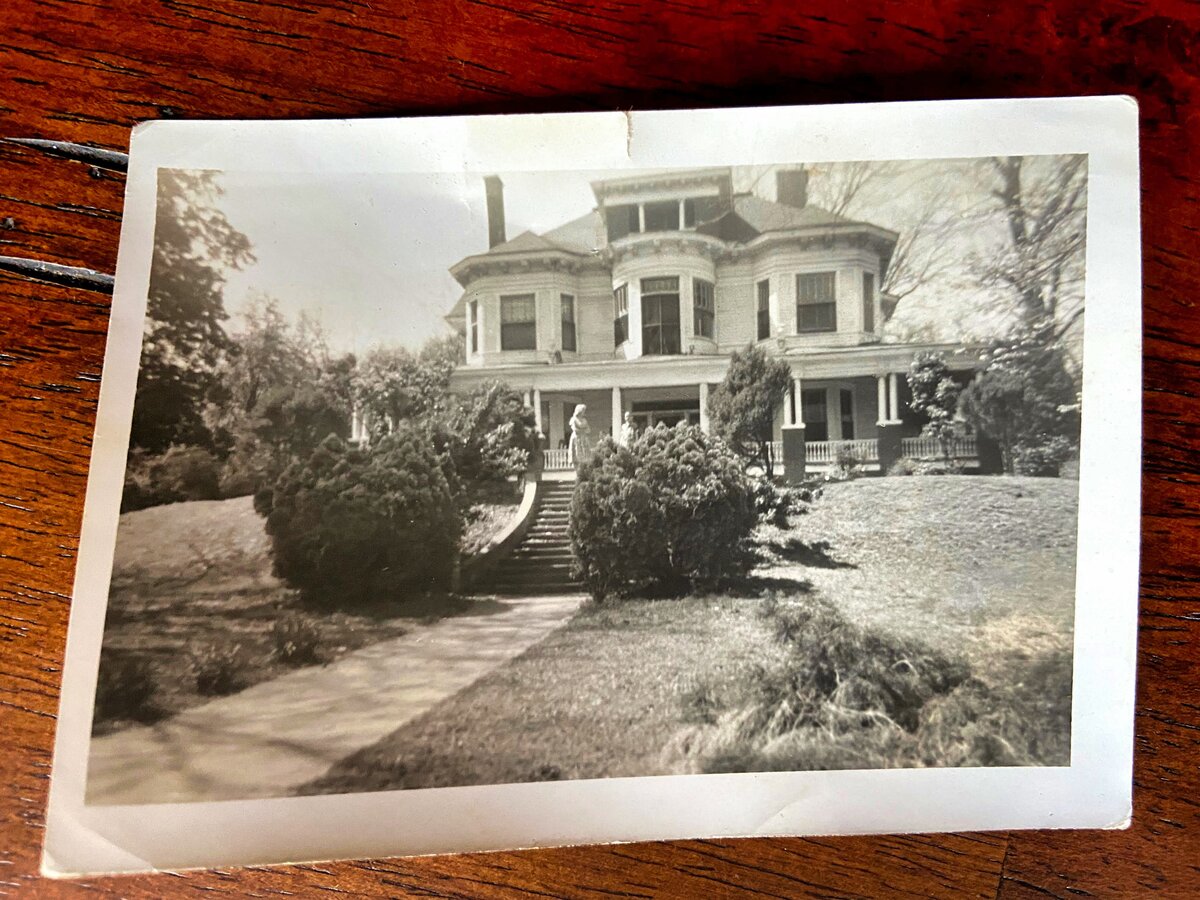
William A. Short built this house in 1904 with cotton money he no longer had by 1917. The house outlasted the fortune that built it, and three other lives after that.
Most places described as "historic" mean they are old. The William A. Short House at 317 Biscoe Street — the building you are staying in when you check in to the Edwardian Inn — is old in a different way. It has a documented history that tracks a specific man, a specific fortune, a specific collapse, and a specific rescue. The building absorbed 122 years of what Helena went through. You are sleeping in the middle of that.
The Cotton Merchant's Statement
Short moved from Mobile, Alabama to Little Rock in 1885 to manage a branch of the Howell Cotton Company. Three years later he started his own operation: W. A. Short and Company. He was good at it. By the early 1900s, he had branch offices in Pine Bluff, Brinkley, Newport, Cotton Plant, Clarendon, Forrest City, Holly Grove, Marianna, Memphis, and Osceola. A cotton merchant with a regional footprint who had built it himself.
In 1904, at the peak of that success, he commissioned a house in Helena for himself and his wife, Sallie Baker Short. He hired Clem Brothers of Fordyce — the contractors responsible for a number of Helena's grander homes at the turn of the century — and spent $100,000. That is approximately $3.5 million in today's money. The style was Colonial Revival: not Victorian ornamentation, not local vernacular, but the national style that in 1904 said something specific. It said: we are American, we are prosperous, we are part of the mainstream. In post-Reconstruction Arkansas, a cotton merchant choosing Colonial Revival was making a claim about his place in the world.
The house made that claim with specific materials. The first floor features 36 different types of wood — each species selected, each one deliberate. Quarter-sawn oak paneling lines the walls. Nine ornate mantels crafted by artisans in Chicago grace the rooms. He sourced the craftwork from 900 miles away because local was not the point. The semicircular porch sweeps across the entire front facade, visible from the street, designed to be seen.
Thirteen Years
Short owned the house for thirteen years.
The cotton market collapsed in the 1910s — the boll weevil devastation combined with wartime disruptions. What Short had built took longer to build than to lose. By 1917 he was forced to sell the house. He had commissioned it at the exact peak of the Delta cotton economy and sold it as that economy began its long decline.
The house stayed. The fortune did not.
What the House Became
The building's history after 1917 is a compressed version of Helena's twentieth century. By the 1930s it had become a funeral home — the grandest house on Biscoe Street serving as the city's gathering place for the most formal of occasions. In the 1950s and 60s it was converted to family apartments. In the late 1960s and early 70s it operated as Delta Haven, a rehabilitation center. After that, it sat empty. The building that had cost $100,000 in 1904 was abandoned.
When Sonny Boy Williamson II started broadcasting King Biscuit Time from KFFA two blocks away in 1941, the Short House was already a funeral home and already 37 years old. When Williamson died in Helena in 1965, the house had stood for 61 years — changed uses three times, still standing. When the civil rights movement was reshaping the South, the building was apartments. Through all of it, the frame, the woodwork, the nine Chicago mantels, and the 36 species of wood on the first floor held.
Twelve People Who Saw Something
In the early 1980s, a group of twelve investors purchased the abandoned building for nearly nothing. They saw what the property assessors were not pricing: a structurally sound, architecturally significant Colonial Revival house on a historic street, with original woodwork largely intact, that could be converted into a bed and breakfast.
They added private bathrooms to the existing rooms. They decorated each room individually, giving each one its own character and name. On March 3, 1984, they opened the Edwardian Inn.
One year later, in 1985, the building was listed on the National Register of Historic Places.
What You Are Actually Staying In
The Edwardian Inn has been operating for 42 years. The building has been standing for 122. It is older than King Biscuit Time by 37 years. It was already middle-aged when the Delta Blues was being made two blocks away on Cherry Street. The quarter-sawn oak paneling on the walls was milled before the Wright Brothers flew. The nine mantels were crafted in Chicago before the automobile was common.
None of this is decoration. It is the actual house. The woodwork you are touching is the woodwork Short paid for in 1904. The porch you are sitting on is the same porch that faced Biscoe Street when Helena was a prosperous river town and the cotton market was intact. The rooms have been through everything Helena went through, and they are still here.
Most B&Bs say they are historic. We can tell you what historic means, specifically: built 1904, Colonial Revival, NRHP-listed 1985, first floor in 36 species of wood, nine Chicago-made mantels, construction cost $100,000 in 1904 dollars. Abandoned in the late twentieth century. Rescued by twelve people who saw what it was worth.
That is what you are staying in.